Crochet Kids’ Socks with a Simple Crew-Sock Design
These crochet kids’ socks feature a cobalt blue body with golden mustard cuffs, ankle stripes, and rounded toes. The design has a classic crew-sock...
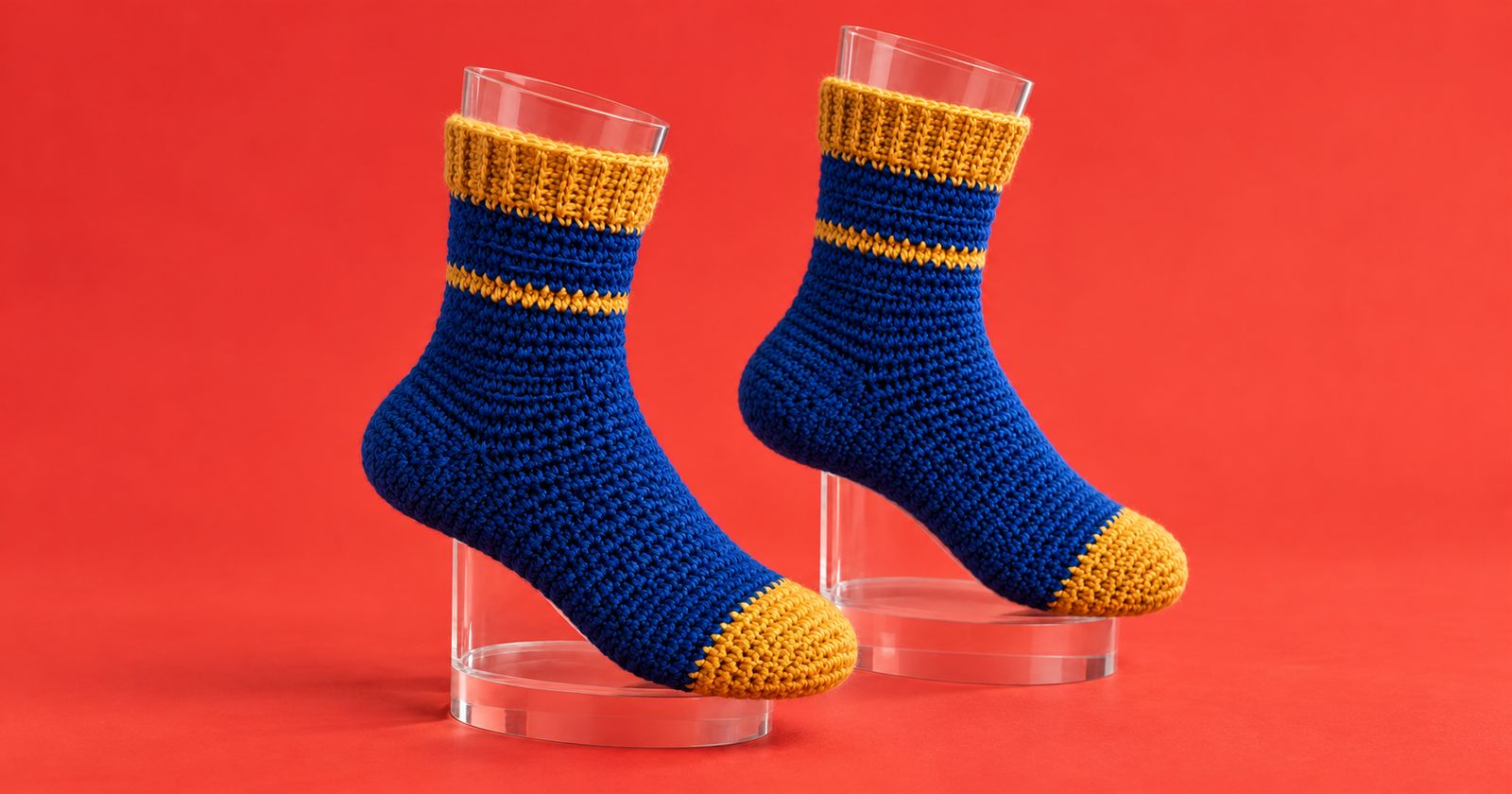
These crochet kids’ socks feature a cobalt blue body with golden mustard cuffs, ankle stripes, and rounded toes. The design has a classic crew-sock shape and is intended as a cozy indoor sock. Its compact fabric and straightforward color blocks make it an appealing project for crocheters who are comfortable working in rounds and ready to try heel shaping.
This article explains the materials, sizing considerations, and construction plan for a youth-size pair. The instructions are a draft pattern: crochet fabric has less stretch than knitted sock fabric, and the fit depends on yarn, gauge, and the child’s foot measurements. Make a gauge swatch and compare the finished measurements before relying on the socks for a particular shoe size. The design has not been physically tested.
Why You’ll Love This Project
The socks use a limited palette and simple color changes, so the cobalt and mustard details stand out without complicated motifs. The cuff is worked separately as a ribbed strip, then joined into a loop. The rest of each sock is built from dense single crochet, with a shaped heel and toe.
The pattern is also adjustable. You can change the leg height, use a different stripe color, or work a shorter cuff. Since these socks are crocheted in a dense fabric, they are best thought of as warm house socks rather than thin socks for wearing inside fitted shoes.
Project Overview
- Project: Children’s crew socks
- Difficulty: Intermediate; comfortable knowledge of single crochet in rounds and basic decreases is helpful
- Estimated time: About 5–8 hours for a pair, depending on experience
- Suggested size: Youth foot approximately 8½–9 inches long; measure the intended wearer
- Yarn: Light/DK weight, smooth and washable
- Hook: 3.5 mm (US E/4), adjusted to meet gauge
- Main techniques: Single crochet, half double crochet, back-loop ribbing, color changes, decreases, heel shaping
- Construction: Ribbed cuff, leg, heel, foot, and rounded toe
- Terminology: US crochet terms
Materials and Supplies Needed
- Approximately 120–150 yards of light/DK-weight yarn in cobalt blue
- Approximately 40–50 yards of light/DK-weight yarn in golden mustard
- 3.5 mm (US E/4) crochet hook, or the size needed to meet gauge
- Stitch markers
- Yarn needle
- Scissors
- Flexible measuring tape
Quantities are estimates for a youth-size pair and will vary with foot length, yarn, and tension.
Choosing the Right Yarn and Hook
Choose a smooth, soft yarn with enough resilience to hold its shape. A washable wool blend or acrylic blend can work well for indoor socks. Check the yarn label before choosing a care method, especially if the socks will be washed often.
A small hook helps make the fabric dense, but crochet socks should not feel stiff or restrictive. If the fabric feels board-like, try a slightly larger hook and check the fit around the foot. A larger hook or thicker yarn can also change the finished size.
Because this design uses single crochet, gauge is important. Make a small swatch in the round if possible; stitches worked in rounds can look different from stitches worked in rows.
Crochet Stitches and Abbreviations
- ch — chain
- sl st — slip stitch
- sc — single crochet
- hdc — half double crochet
- BLO — back loop only
- st / sts — stitch / stitches
- inc — increase; work 2 sc in the same stitch
- sc2tog — single crochet two stitches together
For sc2tog, insert the hook in the next stitch and pull up a loop. Insert the hook in the following stitch and pull up a loop. Yarn over and pull through all loops on the hook.
Before You Start
Measure the child’s foot from the back of the heel to the tip of the longest toe. Also measure around the widest part of the foot and around the ankle. The suggested size is only a starting point; children’s feet vary, and a close fit matters for socks.
The sample planning gauge is 18 sc and 20 rounds = 4 inches in the main fabric, worked in the round. The fabric should be dense enough that gaps do not appear between stitches, but flexible enough to stretch gently.
Use a marker at the beginning of each round. This pattern uses a spiral unless a round is explicitly joined; move the marker up as you work. Try the sock on during construction when possible, or compare it with a sock that fits.
Step-by-Step Crochet Instructions
The following draft uses an approximate youth size. It assumes the gauge above and a foot length near 8½–9 inches. Adjust the stitch count or length to suit the wearer, and make a test sock before making a second.
Make the Ribbed Cuff
With mustard yarn, ch 9.
Row 1: Hdc in the second ch from the hook and in each ch across. (8 hdc)
Row 2: Ch 1, turn. Hdc BLO across.
Repeat Row 2 until the strip measures about 8 inches when gently relaxed. The ribbing should stretch around the ankle without pinching.
Join the short ends with sl sts to form a cuff ring. Avoid pulling the seam tight. Turn the cuff so the seam sits on the inside.
Work the Leg
Join cobalt yarn to the lower edge of the cuff. Work 36 sc evenly around the edge, placing approximately one sc in each rib row. Adjust the pickup count slightly if needed so the cuff lies flat and fits comfortably.
Continue in sc around for approximately 3 inches, or until the leg reaches the desired height above the ankle.
For the narrow mustard stripe, change to mustard at the start of a round and work one full round of sc. Change back to cobalt and work two rounds of sc. When changing colors, complete the final yarn over of the previous stitch with the new color, then carry the unused strand loosely inside the sock or fasten it off and weave in the ends.
Shape the Heel
The heel is worked over half the stitches: 18 sts. Keep the other 18 sts—the instep—on hold with a stitch marker or scrap yarn.
Work the heel flap back and forth over the 18 heel stitches in sc for about 3 inches, or until the flap reaches the back of the heel. Turn at the end of each row. Keep the edges even and count each row.
For the heel cup, shape the lower flap into a shallow curve with decreases at the ends of the working rows. Work an sc2tog at the beginning and end of a row, then work the next row without decreases. Repeat this pair of rows until the heel cup sits smoothly around the back of the heel. The exact number of decrease rows depends on gauge and fit; try the sock on or compare the heel against the wearer’s foot as you shape it.
This heel-shaping section is the least standardized part of the draft. If the heel pulls, add a plain row; if it bags, use another decrease row.
Join the Foot
With the heel shaping complete, work sc along the side of the heel flap, across the held instep stitches, and down the other side of the heel flap. Continue around the heel area to form the foot.
The round count should return to a comfortable circumference around the foot. If the sock feels tight across the instep, add stitches evenly along the heel-flap edges. If it feels loose, reduce a few stitches during the first foot round.
Continue working in sc around the foot until the sock measures about 7 inches from the back of the heel, or until it is roughly 1½ inches shorter than the measured foot length. Try it on or compare it with a well-fitting sock.
Add the Mustard Toe
Change to mustard yarn for the toe. Place markers at the sides of the foot so the decreases are balanced across the top and sole.
Work one decrease round by making an sc2tog on each side of the foot, with the decreases spaced evenly. Work the next round without decreases. Repeat these two rounds until the toe begins to narrow smoothly. Then decrease every round until the opening is small enough to close.
Cut the yarn, leaving a tail. Thread the tail through the remaining stitches and pull gently to close the toe. Secure the yarn on the inside and weave in the end.
Make the Second Sock
Repeat the instructions, keeping the cuff length, leg height, stripe placement, and foot length consistent. Compare the two socks before weaving in all ends so you can adjust any differences.
Assembly and Finishing
Weave in the yarn ends on the inside of each sock, taking care not to create bulky knots against the foot. Check the heel and toe closures for gaps. Gently stretch the cuffs and foot openings by hand to even out the stitches.
Wash and dry the socks according to the yarn label before checking the final fit. Do not block them aggressively; excessive stretching may make them loose.
Tips for Best Results
- Keep the single crochet fabric flexible rather than very tight.
- Count stitches at the end of the cuff pickup and after heel shaping.
- Measure the foot length instead of relying only on age or shoe size.
- Keep color carried inside the sock loose enough to avoid a tight stripe.
- Try on the sock while shaping the heel and foot whenever practical.
- Make one complete sock first, then use it as a measurement guide for the second.
Common Mistakes and Troubleshooting
The cuff feels tight: Add a few ribbing rows or use a slightly larger hook for the cuff. The ribbing should stretch comfortably around the ankle.
The leg twists: Check that the foundation round is not twisted before joining the cuff, and keep the beginning-of-round marker in place.
The heel puckers: Add a plain row between decrease rows or reduce the number of heel decreases. The heel should cup the foot without bunching.
The foot feels too narrow: Add stitches evenly during the first foot round, especially along the heel edges. Avoid adding too many stitches in one spot.
The toe closes too quickly: Work fewer decrease rounds at the start, or leave more stitches before gathering the opening closed.
Creative Variations
Use forest green with golden yellow, raspberry with ivory, or denim blue with coral for another color combination. For a shorter sock, reduce the leg rounds; for a taller crew sock, add rounds before starting the heel.
You can also work the cuff in the main color and reserve the contrast yarn for the toe and a single ankle stripe. Keep any color floats loose inside the sock so they do not restrict the fit.
How to Use or Style Your Crochet Socks
These are best suited to lounging, bedtime, or wearing around the house. The dense crochet fabric may feel bulky inside regular shoes. Pair them with comfortable indoor clothing, or fold the cuff once for a shorter look.
Crocheted socks can be slippery on smooth floors. For children who are walking, consider adding a suitable nonslip treatment or wearing the socks with slippers. Check the grip periodically and follow the product’s instructions if using a treatment.
Care and Maintenance
Follow the yarn label’s washing and drying instructions. If the yarn is machine washable, place the socks in a mesh laundry bag to help protect the fabric. Reshape them gently while damp and dry them flat if the label recommends it.
Store the socks folded rather than hanging, which can stretch the cuffs. Check the heel and toe periodically for thinning, especially if the socks are worn often.
Frequently Asked Questions
What age does this crochet kids’ sock pattern fit?
The draft is intended as a starting point for a youth foot around 8½–9 inches long. Measure the wearer’s foot and adjust the leg and foot dimensions as needed.
Can I use worsted-weight yarn?
Worsted yarn will make a thicker sock and may be too bulky for this stitch count. If you substitute it, make a new swatch and recalculate the circumference and length.
Can these socks be worn with shoes?
They may be too thick for fitted shoes. They are designed primarily as cozy indoor socks, so check the fit carefully before wearing them inside footwear.
How can I make the socks longer?
Add rounds to the leg before beginning the heel. Keep the heel and foot measurements consistent between the pair.
Why is my sock too stiff?
Your hook may be too small, or your tension may be too tight. Try a larger hook and check that the fabric flexes comfortably around the foot.
Do I need to make a gauge swatch?
Yes. Gauge affects the sock’s circumference and length. A swatch helps you choose a hook before investing time in the pair.
Conclusion
These colorful crochet kids’ socks combine a ribbed cuff with a dense cobalt body and simple mustard accents. The adjustable leg and foot length let you tailor the design, while a gauge swatch and careful fitting help improve comfort. Treat the heel instructions as a draft and refine them with a test sock before making a full pair.
Related Crochet Project Ideas
- Crochet child-size slippers
- Crochet leg warmers for kids
- Crochet mittens with matching color blocks
- Crochet hats with ribbed cuffs