Crochet a Colorblock Sweater: Emerald and Coral Pullover Pattern
This relaxed crochet pullover uses simple half double crochet panels to create an emerald sweater with a bold coral chest stripe and matching sleeve...
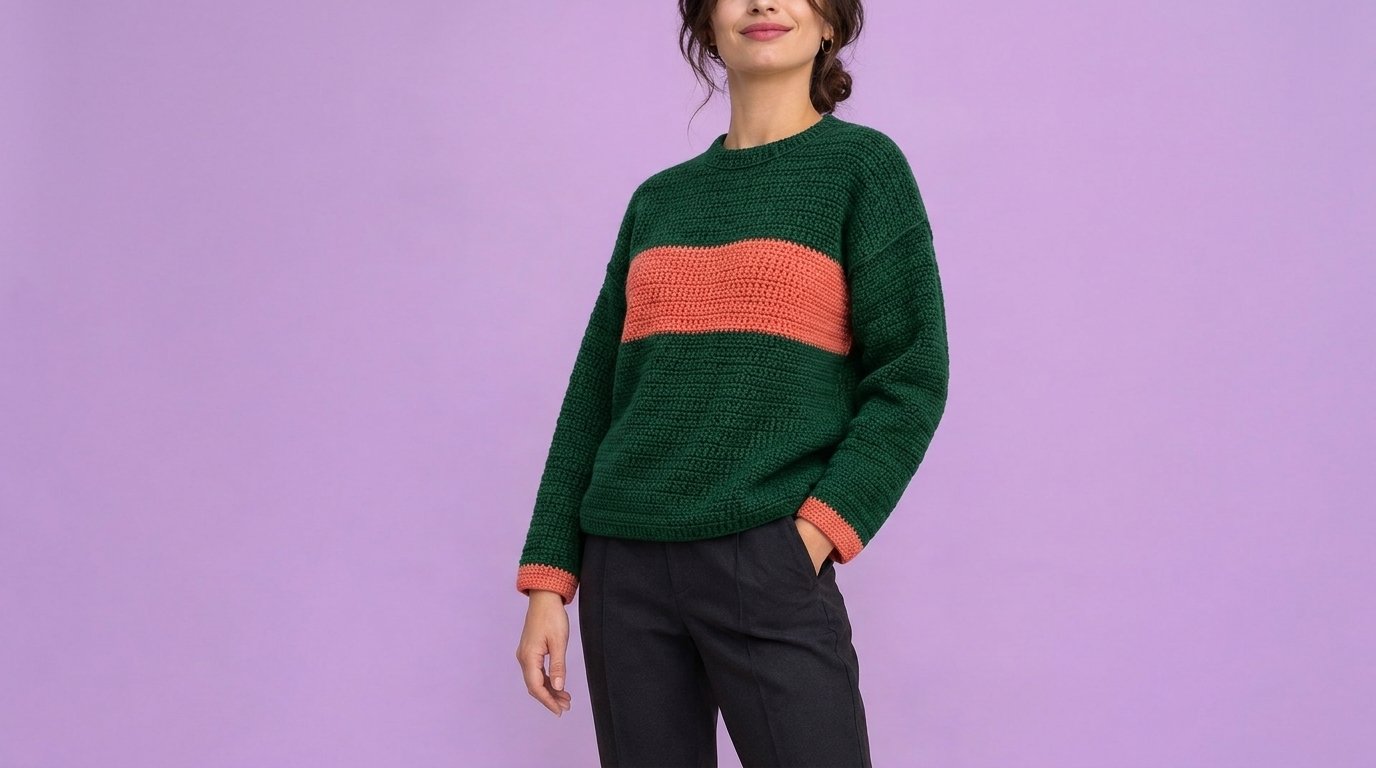
This relaxed crochet pullover uses simple half double crochet panels to create an emerald sweater with a bold coral chest stripe and matching sleeve cuffs. The drop-shoulder construction keeps the shaping straightforward, making it a good project for an advanced beginner who is comfortable crocheting flat pieces and sewing seams.
The instructions below give an estimated adult S/M size. The pattern is a design draft for editorial use, not a physically tested garment. Check the gauge and measurements as you work so you can adjust the fit.
Why You’ll Love This Project
The sweater is made from front and back panels plus two tapered sleeves. A contrasting stripe adds a graphic detail without requiring complicated stitch patterns. Half double crochet makes a substantial fabric, and the roomy shape gives the pullover comfortable ease.
Project Overview
- Project: Adult drop-shoulder pullover
- Difficulty: Advanced beginner
- Estimated time: 15–20 hours
- Estimated finished size: About 44 inches around the body and 22 inches long
- Yarn: Worsted-weight yarn
- Hook: 5.5 mm (I-9), or the size needed to meet gauge
- Techniques: Half double crochet, color changes, simple increases, seaming
- Construction: Two body panels and two sleeves, sewn together
- Terminology: US crochet terms
The finished measurements and time are estimates. Choose a size based on your own measurements and desired ease.
Materials and Supplies
- About 1,200 yards of worsted-weight yarn in deep emerald
- About 350 yards of worsted-weight yarn in coral
- 5.5 mm crochet hook, or size needed for gauge
- Stitch markers
- Yarn needle
- Scissors
- Measuring tape
A smooth, medium-weight yarn makes it easier to see the stitches and sew the panels neatly. Yardage can vary with personal tension and yarn substitution.
Choosing the Right Yarn and Hook
A soft worsted-weight acrylic, cotton blend, or washable wool blend can work for this pullover. Choose a yarn that drapes comfortably without becoming too heavy. Cotton may produce a firmer fabric; a soft acrylic blend may feel lighter and more flexible.
The hook size is a starting point. If your swatch is wider than the gauge below, try a smaller hook. If it is narrower, try a larger hook. Changes in gauge affect the sweater’s finished measurements and yarn use.
Stitches and Abbreviations
- ch — chain
- hdc — half double crochet
- inc — work 2 hdc in the same stitch
- st — stitch
- sts — stitches
For an hdc, yarn over, insert the hook into the stitch, yarn over and pull up a loop, then yarn over and pull through all three loops.
Before You Start
Make a swatch at least 5 inches square in half double crochet. After gently blocking it, aim for 12 hdc and 9 rows = 4 inches. The starting chain does not count as a stitch. Chain 1 at the beginning of each row and work the first hdc into the first stitch.
The main color is emerald and the contrast color is coral. For a tidy stripe, change colors on the final yarn-over of the stitch before the new color begins. Leave tails long enough to weave in securely.
Step-by-Step Crochet Instructions
These instructions are written for one estimated adult S/M size. The front and back are worked from the hem upward. The coral band continues around the front and back at the same height.
Front and Back Panels
Make two matching panels.
With emerald yarn, ch 67.
Rows 1–16: Hdc in the second ch from the hook and in each ch across. (66 sts.) Ch 1, turn.
Rows 17–26: Join coral. Hdc across. (66 sts.) Ch 1, turn.
Rows 27–47: Change to emerald. Hdc across. (66 sts.) Ch 1, turn.
Shape the shoulders and neckline:
Row 48: Hdc across the first 21 sts. Leave the next 24 sts unworked for the neckline. Join a second strand of emerald to the next stitch and hdc across the last 21 sts. Each shoulder has 21 sts.
Work each shoulder separately.
Rows 49–50: Ch 1, turn. Hdc across the 21 shoulder sts.
Fasten off. Repeat on the other shoulder. Make the second panel the same way. The center opening creates a wide, shallow neckline.
Sleeves
Make two sleeves, working from the cuff toward the shoulder.
With coral yarn, ch 19.
Rows 1–6: Hdc in the second ch from the hook and across. (18 sts.) Ch 1, turn.
Change to emerald.
Rows 7–40: Hdc across, increasing at both ends on rows 7, 11, 15, 19, and 23. For an increase row, work 2 hdc in the first stitch, hdc across to the last stitch, then work 2 hdc in the last stitch. The stitch count increases by 2 on each increase row: 20, 22, 24, 26, then 28 sts. Work the remaining rows even.
Fasten off, leaving a long tail for seaming. Make the second sleeve to match.
Size Adjustments
For a longer body, add rows before the shoulder shaping. For a wider body, add an even number of stitches to each panel and adjust the shoulder and neckline counts to keep the neckline centered.
For longer sleeves, add rows after the final increase. For wider sleeves, add increase rows at even intervals. Recheck the measurements before making the second sleeve so both match.
Assembly and Finishing
Lay the front and back panels together with right sides facing inward. Sew each shoulder seam across the 21 shoulder stitches, leaving the center neckline open.
Fold each sleeve lengthwise and sew its long edge to make a tube. Mark the center of the sleeve’s wider edge and align it with the shoulder seam. Pin the sleeve into the armhole opening. Sew it in place, easing the sleeve gently if needed.
Sew each side seam from the hem upward, stopping about 9 inches below the shoulder to leave an armhole opening. Attach the sleeves to the armholes, matching the sleeve seam to the body side seam.
Turn the sweater right side out. Join emerald yarn at the neckline and work one round of single crochet evenly around the opening; adjust the spacing to keep the edge flat. Fasten off and weave in all ends.
Tips for Best Results
- Count stitches at the end of each row, especially on the sleeve increase rows.
- Use markers to identify the 21-stitch shoulders and 24-stitch neckline.
- Measure the panels before sewing; small gauge differences can change the fit.
- Pin sleeve centers and underarm seams before stitching them together.
- Weave in color-change tails along the back of the fabric without pulling the stripe edge tight.
Common Mistakes and Troubleshooting
The panels are wider or narrower than expected. Recheck your gauge. If the difference is large, change hook size or adjust the stitch count before making both panels.
The stripe edges look loose. Keep the yarn relaxed but not slack when changing colors, and weave in ends along the stripe’s edge.
The sleeve edges flare or pull in. Confirm the increase rows are spaced correctly and compare both sleeves before seaming.
The neckline feels too wide. Sew a little farther across the shoulder on each side, or add a few stitches to the neckline edging.
The armhole puckers. Check that the body opening and sleeve edge are aligned. Redistributing the pins may help before you sew.
Creative Variations
Try a different saturated contrast color, such as cobalt, raspberry, or golden mustard. You can make the chest band narrower by working fewer coral rows, or wider by adding rows while keeping the same stripe placement on both panels. For a more relaxed fit, add stitches to both body panels and adjust the sleeve width to match.
How to Wear Your Crochet Sweater
Wear the pullover with jeans or tailored trousers for an easy layered outfit. The roomy silhouette works over a fitted shirt in cool weather. Since this is a hand-crocheted garment, avoid carrying heavy items in the pockets or pulling at the sleeve seams.
Care and Maintenance
Follow the yarn label’s care instructions. If the yarn allows hand washing, gently soak the sweater in cool water with mild detergent, then press out excess water without wringing. Lay it flat to dry and reshape the panels and sleeves while damp. Store folded to help prevent stretching.
Frequently Asked Questions
Is this crochet sweater pattern suitable for a first garment?
It is best for an advanced beginner who can maintain even rows, count stitches, and sew panels together. A small swatch and careful measuring are especially helpful.
Can I use a different yarn weight?
You can, but the finished size and drape will change. Make a new swatch and adjust the stitch counts to suit your gauge.
Does the coral stripe go around the back?
Yes. Work rows 17–26 in coral on both the front and back panels so the stripe continues around the sweater.
Can I make the sleeves shorter?
Yes. Work fewer rows after the final sleeve increase. Make both sleeves the same length and compare them before sewing.
How can I make the sweater wider?
Add the same number of stitches to each body panel. Keep the extra stitches balanced at both sides and revise the shoulder and neckline stitches so they remain centered.
Is this pattern physically tested?
No. The measurements and yardage are estimates, and the pattern has not been physically tested. Check gauge and fit while making the panels.
Conclusion
This emerald and coral pullover uses straightforward half double crochet panels to create a bold colorblock look. Check your gauge, make the matching pieces, and adjust the length or width to suit your preferred fit.
Related Crochet Projects
- A simple crochet beanie in coordinating yarn
- A matching half double crochet scarf
- A colorblock crochet vest
- A lightweight crochet cardigan